
The Role of Surfactants in Agrochemical Formulations: Enhancing Stability, Spray Efficiency, and Crop Protection Performance

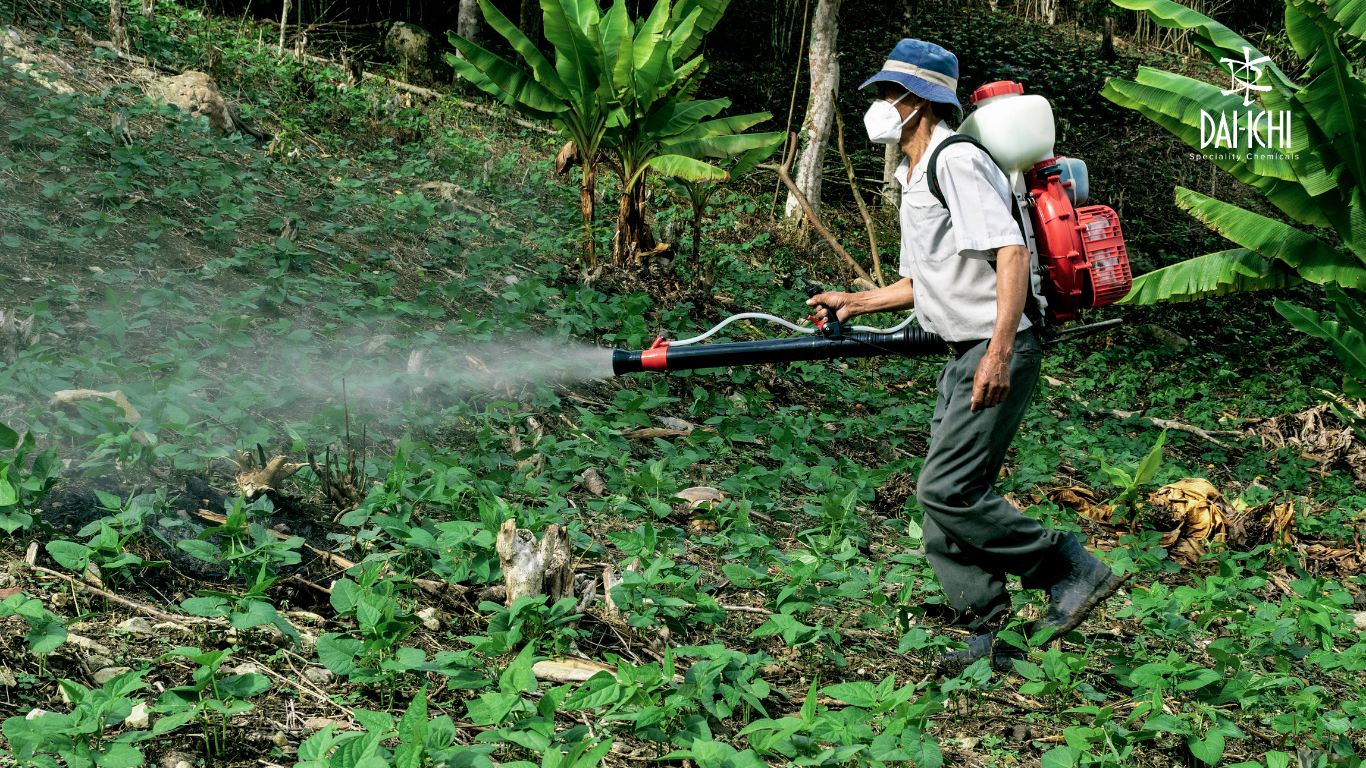
Modern agriculture relies heavily on crop protection products such as herbicides, insecticides, and fungicides to maintain yield and crop health. However, the effectiveness of these products depends on the formulation system that enables efficient delivery to the plant surface.
Surfactants play a critical role in agrochemical formulations by improving wetting, spreading, dispersion, emulsification, and penetration of active ingredients. By modifying interfacial properties, surfactants ensure that agrochemicals are effectively distributed, retained, and absorbed, ultimately enhancing their biological performance.
The Function of Surfactants in Agrochemical Systems
1. Reduction of Surface Tension and Improved Wetting
Plant leaf surfaces are naturally hydrophobic due to the presence of waxy cuticles. As a result, when aqueous sprays are applied, droplets tend to bead up rather than spread across the surface, limiting the contact area between the active ingredient and the plant. Surfactants reduce the surface tension of spray droplets, enabling them to spread more effectively across leaf surfaces rather than forming droplets with high contact angles. This leads to:
- Improved spray coverage
- Increased contact area between the active ingredient and the plant surface
- Enhanced pesticide efficiency
Improved wetting is particularly important for crops with highly waxy foliage, where droplet retention and spreading would otherwise be limited.
The NOIGEN range from Dai-ichi includes nonionic ethoxylated and propoxylated low foam surfactants designed to deliver optimal wetting performance across a wide range of agrochemical formulations. Their controlled foam profile also makes them suitable for spray systems where foam management is critical.
2. Enhanced Spreading and Retention on Plant Surfaces
Besides basic wetting, surfactants play a key role in controlling droplet spreading and retention behavior on plant surfaces. By reducing the contact angle, droplets spread more efficiently and cover a larger surface area. This improved spreading leads to:
- Better contact between the pesticide and the target pest or weed
- Reduced spray runoff from plant surfaces
- Higher retention of active ingredients on the leaf
These characteristics are essential for maximizing the effectiveness of crop protection formulations, particularly in high-performance agricultural systems where uniform coverage is critical.
3. Emulsification of Hydrophobic Active Ingredients
Many agrochemical active ingredients exhibit poor water solubility, making it necessary to formulate them in systems such as Emulsifiable Concentrates (EC). Surfactants act as emulsifiers that stabilize the interface between oil-based active ingredients and water. During dilution in spray tanks, they enable the formation of stable oil-in-water emulsions, ensuring uniform distribution of the active ingredient. An effective emulsifier system ensures:
- Uniform dispersion of active ingredients
- Stable emulsions during dilution and application
- Consistent dosing across sprayed areas
Dai-ichi offers optimized anionic and nonionic surfactant pairs that provide rapid and efficient emulsification. When used in the appropriate ratio, these systems deliver instantaneous emulsification with visible blooming upon dilution in water, forming highly stable emulsions suitable for multiple agrochemical toxicants. Specialized surfactant pairs are also available for active ingredients that are otherwise difficult to emulsify into stable systems.
4. Dispersion Stability in Suspension Concentrate (SC) Formulations
For agrochemical formulations containing solid active ingredients such as suspension concentrates (SC), surfactants function as dispersing agents to maintain particle stability. Dispersants adsorb onto particle surfaces and prevent aggregation through electrostatic or steric stabilization mechanisms, ensuring uniform dispersion within the formulation.
Effective dispersant systems provide:
- Stable suspensions during storage
- Reduced sedimentation over time
- Easy redispersion prior to application
To address these requirements, Dai-ichi offers dispersing agents from the NETACRYL and NOIGEN series. These polymeric dispersants are engineered to deliver long-term stability and consistent performance in agrochemical suspension systems.
5. Penetration Enhancement and Active Ingredient Uptake
In many agrochemical applications, particularly systemic herbicides and fungicides, the ability of the active ingredient to penetrate the plant cuticle is crucial for effective performance. Certain surfactants act as penetration enhancers, facilitating transport through the waxy cuticular layer into plant tissues. By improving interaction between the droplet and the plant surface, these surfactants enhance active ingredient uptake.
This results in:
- Faster uptake of active ingredients
- Improved systemic activity
- Enhanced efficacy at lower application rates
Understanding the relationship between surfactant chemistry and plant physiology is therefore key to optimizing agrochemical performance.
Formulation Considerations in Surfactant Selection
Selecting the right surfactant system for agrochemical formulations requires balancing multiple formulation parameters:
- Hydrophilic–Lipophilic Balance (HLB) for emulsification efficiency
- Compatibility with active ingredients and solvents
- Water hardness tolerance in field spray solutions
- Stability across varying pH conditions
- Controlled foaming during mixing and spraying
An optimized surfactant system must balance these parameters to ensure both formulation stability during storage and effective performance during application.
Tailored Surfactant Solutions for Agrochemical Formulators
As agrochemical formulations become more complex, there is an increasing need for customized surfactant systems that are designed around specific active ingredients, formulation types, and application conditions.
At Dai-ichi, we work closely with formulators to develop application-specific surfactant solutions tailored to their requirements. This includes:
- Selection and optimization of surfactant chemistries based on formulation type (EC, SC, EW, etc.)
- Development of customized emulsifier and dispersant packages for challenging active ingredients
- Performance optimization for specific crops, spray conditions, and geographies
- Support in improving formulation stability, efficiency, and regulatory compliance
This collaborative approach enables formulators to move beyond standard additives and adopt high-performance, purpose-built formulation systems.
Emerging Trends in Agrochemical Surfactant Technologies
The agrochemical industry is witnessing a shift toward sustainable and high-performance formulation technologies. Key trends include:
- APEO-free surfactant systems
- Bio-based surfactants derived from renewable raw materials
- Multifunctional adjuvants combining wetting, spreading, and penetration
These innovations are enabling more efficient crop protection while aligning with evolving environmental and regulatory requirements.
Conclusion
Surfactants are a fundamental component of modern crop protection formulations, enabling efficient delivery and improved performance of active ingredients. From enhancing wetting and dispersion to stabilizing emulsions and improving penetration, surfactant systems address critical challenges in agrochemical formulation and application.
As agricultural demands continue to evolve, the focus is shifting toward high-performance, customized surfactant systems that can deliver both efficiency and sustainability. Dai-ichi plays a key role in this transition by enabling formulators with advanced, application driven surfactant technologies.
Contact us to get customized solutions for the challenges.
📞 +91 72087 26483
🌐 www.dai-ichiindia.com
📩 sales@dai-ichiindia.com
- How Surfactant Structure Affects Performance in Textile Auxiliaries
- Importance of Specialty Chemicals in Sustainable Agrochemical Formulations
- How Dispersant Chemistry Controls Particle Stability in Agrochemical Formulations
- Formulation Strategies for Multi-functional Home Care Products
- Why Corrosion Persists in Oilfield Systems and How Inhibitors Help Control It