

Improving Colour Development Through Better Pigment Dispersion
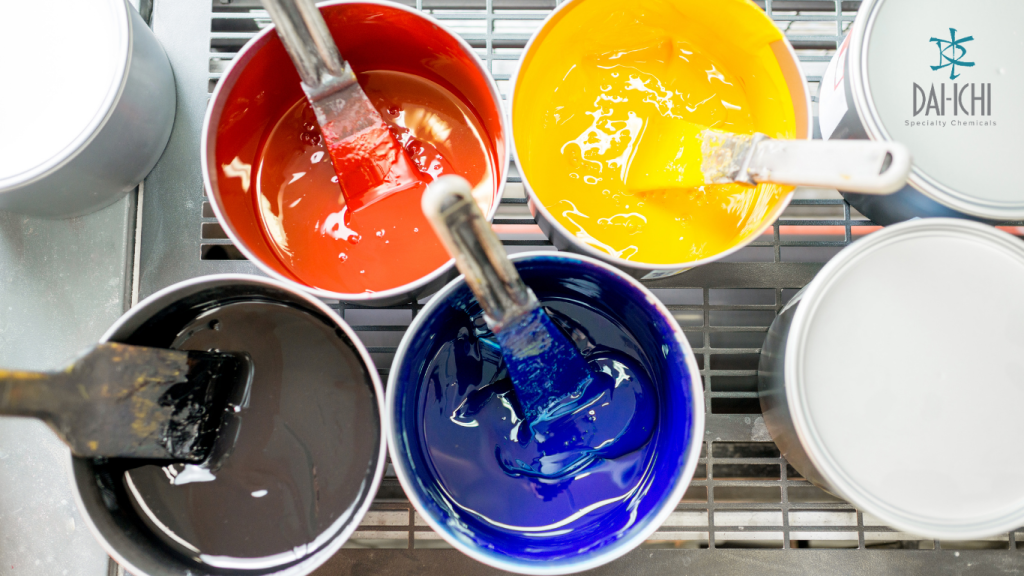
In paint and coating formulations, what makes a colour truly stand out? It is not pigment concentration alone. Pigment dispersion plays a decisive role in unlocking a pigment’s full potential, enhancing colour development, opacity, tinting strength and visual uniformity.
When pigment particles are well dispersed, they can deliver richer, brighter and more consistent colour. But when they remain agglomerated, their available surface area is reduced, limiting the performance your formulation could otherwise achieve.
For formulators, optimising pigment dispersion is an exciting opportunity to improve colour strength, enhance batch-to-batch consistency and create coatings that perform with greater reliability. So, how can better dispersion help your formulation achieve its best colour performance?
Why Pigment Dispersion Affects Colour Development
Pigment particles have a natural tendency to form aggregates due to attractive forces between their surfaces. During dispersion, these aggregates need to be broken down and the newly exposed pigment surfaces must be effectively stabilised.
When pigment particles remain poorly dispersed, several problems can occur. Larger agglomerates can reduce colour strength, create uneven colour distribution and increase the risk of settling. They may also contribute to surface defects, such as specks, flocculation and inconsistent gloss.
In contrast, a well-dispersed pigment system makes more effective use of the available pigment surface. This allows the formulation to achieve stronger, cleaner and more uniform colour development. Improved dispersion can also support better opacity and tinting strength without requiring unnecessary increases in pigment loading.
This is particularly important for high pigment loading formulations, where particle interactions become more significant and maintaining stability becomes more challenging.
The Three Stages of Effective Pigment Dispersion
Successful dispersion involves more than simply mixing pigment into a binder or liquid phase. It generally includes three important stages: wetting, particle-size reduction and stabilisation.
First, the liquid phase must effectively wet the pigment surface and displace air from the agglomerates. Poor wetting can lead to slow incorporation, floating pigment and inefficient use of milling energy.
Next, mechanical energy is applied to break down agglomerates and achieve the desired particle size distribution. The efficiency of this stage depends on equipment, milling conditions, formulation viscosity, pigment characteristics and the presence of suitable dispersing additives.
Finally, the newly separated particles must be stabilised to prevent them from coming together again. Without adequate stabilisation, re-agglomeration can occur during storage or after the coating has been applied.
The Role of Dispersing Agents
Mechanical energy alone may not be sufficient to achieve stable pigment dispersion. Dispersing agents for pigments help improve the interaction between the pigment surface and the continuous phase.
An effective dispersant can adsorb onto pigment particles and reduce particle-to-particle attraction. Depending on the chemistry and formulation system, stabilisation may occur through steric or electrostatic mechanisms. The objective is to prevent re-agglomeration after the milling process has separated the pigment particles.
However, dispersant selection should not be based only on initial dispersion speed. Compatibility with the pigment chemistry, binder system, solvent or water phase and other formulation components is equally important.
A dispersant that performs well with one pigment or resin system may not deliver the same results in another. Surface chemistry, polarity, particle size and pigment concentration can all influence adsorption and stabilisation. For this reason, laboratory screening and application-specific testing are essential.
Optimising Dispersion for Better Colour Strength
Colour development depends on achieving the right balance between pigment wetting, particle-size reduction and stabilisation. A dispersant that provides rapid wetting but insufficient long-term stabilisation may deliver good initial colour development but poor storage stability.
Conversely, an incompatible dispersant may interfere with viscosity, gloss, transparency, water resistance or other coating properties. The goal is not simply to use more dispersant, but to identify the chemistry and dosage that provide the best overall formulation performance.
Formulators should evaluate parameters such as:
- Pigment wetting and incorporation
- Particle size and distribution after milling
- Tinting strength and colour development
- Viscosity and rheology
- Storage stability and re-agglomeration
- Gloss, opacity and visual uniformity
- Colour difference between batches
- Compatibility with the complete formulation
The optimum dispersant dosage is also critical. Under-dosing can result in incomplete surface coverage and poor stability, while excessive dosage may affect formulation properties without providing proportional performance benefits. Dosage optimisation should therefore be carried out through controlled testing rather than relying solely on standard addition levels.
Processing Conditions Also Matter
Even the right dispersant may not deliver its full benefit if processing conditions are not optimised. Mixing speed, order of addition, milling time, temperature and equipment configuration can all influence dispersion quality.
Adding the dispersant before or during pigment incorporation can help promote effective wetting. In some systems, pre-dispersing the pigment with part of the binder or liquid phase may improve milling efficiency. However, excessive shear or heat can sometimes affect viscosity, resin stability or final coating performance.
Monitoring the dispersion process through grind-gauge measurements, particle-size analysis, viscosity testing and colour-strength evaluation can help identify the point at which additional milling provides limited benefit. This supports more efficient processing and helps prevent unnecessary energy consumption.
Building More Consistent Pigment Formulations
Better pigment dispersion is not simply about achieving smaller particles. It is about creating a stable particle population that consistently delivers the required optical performance.
For paint and coating manufacturers, this can translate into improved colour reproducibility, better batch consistency and more efficient pigment utilisation. A systematic approach to dispersant selection and formulation optimisation can also help address challenges such as viscosity drift, settling, flooding, floating and colour variation during scale-up.
The benefits extend beyond appearance. Consistent dispersion can improve application behaviour, reduce production adjustments and support more predictable performance across different batches and manufacturing sites.
At Dai-ichi, we take an application-focused approach to pigment dispersion, helping formulators evaluate surfactant and dispersant chemistry based on pigment type, binder system, formulation requirements and processing conditions.
Better dispersion is the foundation for better colour development, from laboratory trials to full-scale production.
Looking to Improve Pigment Dispersion?
Our technical team can help evaluate the suitability of dispersant chemistry and dosage for your pigment and coating system, with a focus on colour development, dispersion stability, viscosity and formulation consistency
Talk to our technical team to identify the right dispersant chemistry for your pigment and coating system.
📞 +91 72087 26483 🌐 www.dai-ichiindia.com 📩 sales@dai-ichiindia.com
- Improving Colour Development Through Better Pigment Dispersion
- How Surfactant Structure Affects Performance in Textile Auxiliaries
- Importance of Specialty Chemicals in Sustainable Agrochemical Formulations
- How Dispersant Chemistry Controls Particle Stability in Agrochemical Formulations
- Formulation Strategies for Multi-functional Home Care Products