
Why Corrosion Persists in Oilfield Systems and How Inhibitors Help Control It
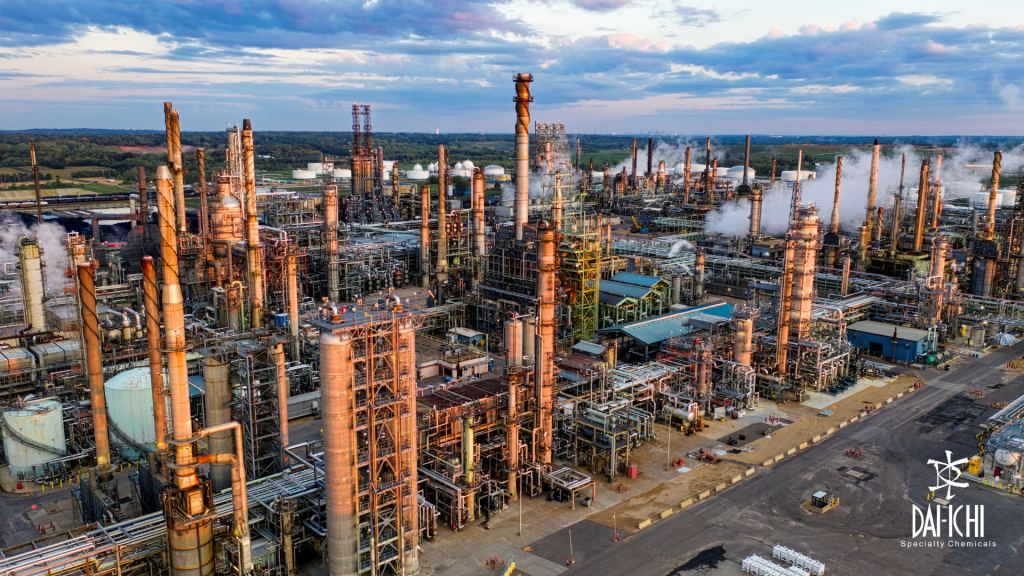
Corrosion remains one of the most persistent and costly challenges across oil and gas production, transportation and processing systems. As produced fluids move through wellbores, flowlines, pipelines and surface equipment, exposure to water, dissolved gases and microbial activity can accelerate metal degradation, increasing the risk of leaks, equipment failure and unplanned shutdowns.
As fields age and operating conditions become more demanding, effective corrosion management therefore requires more than periodic inspection. It depends on understanding produced fluid chemistry, monitoring operating conditions and selecting inhibitor chemistry suited to the application.
What Drives Corrosion in Oilfield Systems
Corrosion occurs when metal surfaces interact with corrosive species in produced fluids such as carbon dioxide, hydrogen sulfide, oxygen and chloride rich brines. Its severity depends on factors including temperature, pressure, water cut, flow conditions, fluid chemistry and microbial activity.
As production conditions change, corrosion can appear as general metal loss or localized damage such as pitting. While metallurgy, coatings and cathodic protection are important, chemical inhibition remains a key component of corrosion management for internal pipelines and production equipment.
Common Challenges Operators Face
- Changing produced-fluid chemistry across wells, fields and stages of production
- Differing CO₂/H₂S ratios affecting corrosion mechanism and severity
- Multiphase flow conditions that disrupt inhibitor film stability
- Microbiologically influenced corrosion from sulfate reducing bacteria
- Erosion-corrosion in high velocity or solids laden systems
- Compatibility requirements with scale inhibitors, demulsifiers and other production chemicals
These conditions make corrosion control highly application specific, as inhibitor performance can vary between systems. Effective selection therefore requires more than standard laboratory testing and must consider fluid composition, temperature, flow regime, dosage, injection method and chemical compatibility. Laboratory testing that closely simulates field conditions can help guide selection and optimization before deployment.
Key Inhibitor Technologies
Different corrosion environments require different chemical approaches. Common technologies include:
Filming corrosion inhibitors
Form a protective film on the metal surface, limiting contact between the metal and corrosive species. Common chemistries include imidazolines, amides and quaternary ammonium compounds.
Hydrogen sulfide scavengers
React with H₂S to reduce its concentration in the production system, supporting sour service management and process safety. Selection depends on the fluid system, treatment method and required reaction efficiency.
Oxygen scavengers
Remove dissolved oxygen from water systems to reduce oxygen driven corrosion, particularly in injection and water treatment applications.
Multifunctional treatment packages
Where formulation compatibility allows, multifunctional treatment packages can combine corrosion control with requirements such as scale or wax management.
Why Application Specific Formulation Matters
Produced fluid chemistry and operating conditions can vary significantly between fields and even between wells. As a result, a formulation that performs well in one system may not deliver the same protection elsewhere.
Application specific development considers fluid composition, temperature, pressure, flow conditions, dosage, injection method and chemical compatibility. Laboratory screening and performance testing under representative conditions can help identify suitable chemistry, optimize dosage and improve inhibitor persistence.
How Dai Ichi Supports Corrosion Inhibitor Development
Dai-ichi supports oilfield chemical development with specialty surfactants, corrosion inhibitor intermediates, H₂S scavengers and performance additives used in corrosion inhibition and broader production chemistry applications.
Our technical approach focuses on understanding the application and selecting chemistry combinations suited to the required performance, compatibility and operating conditions. For formulators and oilfield chemical service providers, this enables a more targeted approach to developing corrosion inhibitor systems for specific field requirements.
From Corrosion Control to Production Reliability
Effective corrosion management is central to asset integrity, operational reliability and safe oilfield production. Because no single inhibitor is suited to every operating environment, successful corrosion control depends on the right chemistry, the right formulation and the right application strategy.
By combining laboratory evaluation with an understanding of field conditions, oilfield chemical developers can build treatment programs that support longer equipment life, more reliable operations and improved chemical efficiency.
Looking to develop or optimize a corrosion inhibitor formulation?
Connect with Dai Ichi Karkaria to explore specialty chemical solutions for your oilfield application.
📞 +91 72087 26483 🌐 www.dai-ichiindia.com 📩 sales@dai-ichiindia.com
- Improving Colour Development Through Better Pigment Dispersion
- How Surfactant Structure Affects Performance in Textile Auxiliaries
- Importance of Specialty Chemicals in Sustainable Agrochemical Formulations
- How Dispersant Chemistry Controls Particle Stability in Agrochemical Formulations
- Formulation Strategies for Multi-functional Home Care Products