How Dai-ichi’s Specialty Chemicals Help Address Flow Assurance Challenges in Oilfield Operations
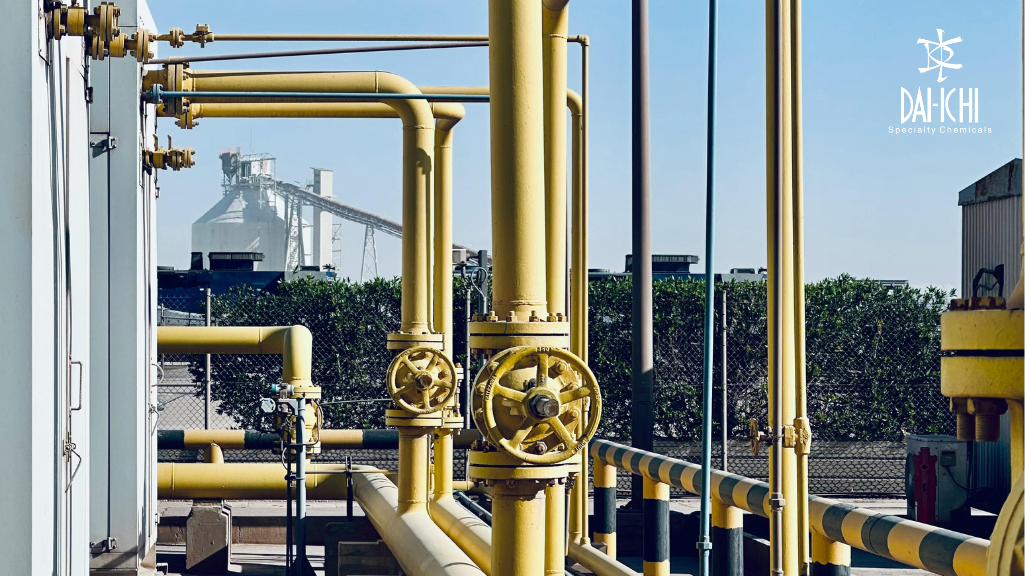
In oil and gas production, every restriction in flow causes localised pressure drop and alters the fluid dynamics to create operational consequences.
Changes in temperature, pressure and crude oil composition can trigger wax deposition, asphaltene precipitation, hydrate formation and other challenges that accelerate the pipeline blockage and disrupt hydrocarbon movement. These issues can increase pipeline pressure drop, reduce production efficiency, damage the production equipment and affect the reliability of transportation systems.
Specialty chemicals play an important role in managing these challenges. However, effective flow assurance requires more than individual chemical treatments. It depends on understanding fluid behaviour, operating conditions and selecting suitable formulations for specific applications.
Understanding the Major Flow Assurance Challenges
Flow assurance involves maintaining the uninterrupted movement of hydrocarbons from production wells through gathering systems and pipelines to processing facilities. Several physical and chemical mechanisms can interfere with this process.
1. Paraffin and Wax Deposition
Paraffinic components naturally present in crude oil can crystallise as temperatures decrease during production and transportation. These wax crystals may accumulate on pipeline walls and production equipment, gradually restricting flow and increasing pressure drop. Wax deposition can also influence crude oil viscosity and low-temperature flow properties, making transportation more challenging.
Chemical approaches such as wax crystal modifiers, dispersants and pour point depressants help to minimize wax crystallisation and particle aggregation, thereby maintaining low-temperature flow behaviour.
2. Asphaltene Precipitation
Asphaltenes are polar heavy aromatic hydrocarbon components that can become unstable when crude oil thermodynamic equilibrium shifts under change of operational conditions such as pressure, temperature, chemical compatibility. Their precipitation and subsequent aggregation may result in fouling within wellbores, flowlines and processing equipment. Effective management requires an understanding of crude oil characteristics and the conditions that influence asphaltene stability.
Specialty dispersants and stabilising chemistries can help manage particle aggregation and reduce deposition tendencies, depending on the crude oil system.
3. Gas Hydrate Formation
Gas hydrates are crystalline structures formed when gas molecules entrap during water freeze along with light hydrocarbons under suitable low-temperature and high-pressure conditions. Their formation can restrict or completely block flow through pipelines, particularly in offshore and subsea production systems.
Hydrate management strategies include thermodynamic inhibitors and low-dosage hydrate inhibitors, selected according to operating conditions and system requirements.
4. Scale Deposition
Changes in pressure, temperature and produced-water composition can cause dissolved minerals to precipitate and form inorganic deposits. Scale accumulation can restrict fluid movement, resist heat transfer and interfere with production equipment.
Scale inhibitor treatments are commonly used to control mineral precipitation and reduce deposit formation.
5. Emulsion Formation and Fluid Stability
The interaction of oil, water under high turbulence mixing with naturally occurring surface-active components can result in stable emulsions. Depending on their characteristics, these emulsions drastically increase apparent viscosity, complicate separation processes and influence the efficiency of downstream operations.
Specialty surfactants and demulsifier formulations play an important role in controlling interfacial behaviour and supporting effective oil-water separation.
Why Specialty Chemical Formulation Matters
Flow assurance challenges rarely occur in isolation. Wax deposition, asphaltene instability, scale formation and emulsion behaviour can overlap within the same production system. Selecting the right chemical treatment therefore requires consideration of:
- Fluid Composition: Crude oil characteristics, paraffin content and produced-water composition.
- Operating Conditions: Temperature, pressure and flow requirements.
- Chemical Compatibility: Interactions between different treatment chemistries.
- Dosage Optimisation: Suitable treatment concentrations for the intended application.
- Performance Evaluation: Formulation performance under representative field conditions.
The objective is to identify chemical formulations that address specific challenges while remaining compatible with the overall production system.
How Dai-ichi Supports Oilfield Flow Assurance Formulations
Addressing flow assurance challenges requires a combination of chemical expertise, formulation development and an understanding of application-specific requirements. At Dai-ichi, our expertise in specialty surfactants and polymer chemistry supports the development of performance-oriented solutions for oilfield applications. Our oilfield chemical portfolio includes technologies used in the development of:
- Wax Inhibitor Formulations: Designed to manage wax crystallisation and deposition under specific crude oil and operating conditions.
- Pour Point Depressants: Formulated to improve the low-temperature flow characteristics of crude oil.
- Flow Improvers: Developed to support improved flow behaviour and address transportation-related challenges.
- Paraffin Dispersants: Used to help manage wax particles and reduce their tendency to aggregate and deposit.
- Multifunctional Flow Assurance Packages: Formulation approaches that combine compatible chemical technologies to address specific application requirements.
The performance of these formulations depends on several variables, including crude oil composition, operating temperature, treatment concentration and compatibility with other production chemicals.
We focus on application-oriented chemical solutions, supporting formulation requirements through its expertise in specialty chemical technologies.
Supporting More Reliable Oilfield Operations
Maintaining flow assurance is essential for supporting production continuity and reliable hydrocarbon transportation. As operating conditions and crude oil characteristics vary, the need for application-specific chemical formulations becomes increasingly important.
Dai-ichi’s expertise in specialty surfactants, polymers and performance additives contributes to the development of oilfield formulations designed around these requirements.
Looking for the Right Chemistry for Your Oilfield Formulation?
Connect with Dai-ichi to explore specialty chemical solutions for wax inhibitors, pour point depressants, flow improvers and paraffin dispersants.
📞 +91 72087 26483 🌐 www.dai-ichiindia.com 📩 sales@dai-ichiindia.com
- How Dai-ichi’s Specialty Chemicals Help Address Flow Assurance Challenges in Oilfield Operations
- From Zero Defect to Lower Waste: Dai-ichi’s Approach to Sustainable Manufacturing
- Emulsion Stability in Skin Care: Key Factors Influencing Lotion and Cream Performance
- Specialty Sizing Agents: Enabling Performance in High Speed Synthetic Yarn Processing
- Precision in Process, Consistency in Performance: Manufacturing Specialty Chemicals at Dai-ichi